Why Addiction Is Described as a Disease: The Smoking Analogy That Finally Makes Sense
One of the questions I hear most often is: "If addiction is really a disease, why can't people just stop? "I don't actually think the biggest barrier is that people reject science. I think it's that people don't understand the brain. The brain is incredibly complex. We can't see it changing in the same way we can see a broken bone or a diseased lung. Because those changes are invisible, people often mistake addiction for a lack of willpower rather than recognising it as a genuine medical condition. So let me explain it differently.
Imagine the Lungs Instead of the Brain
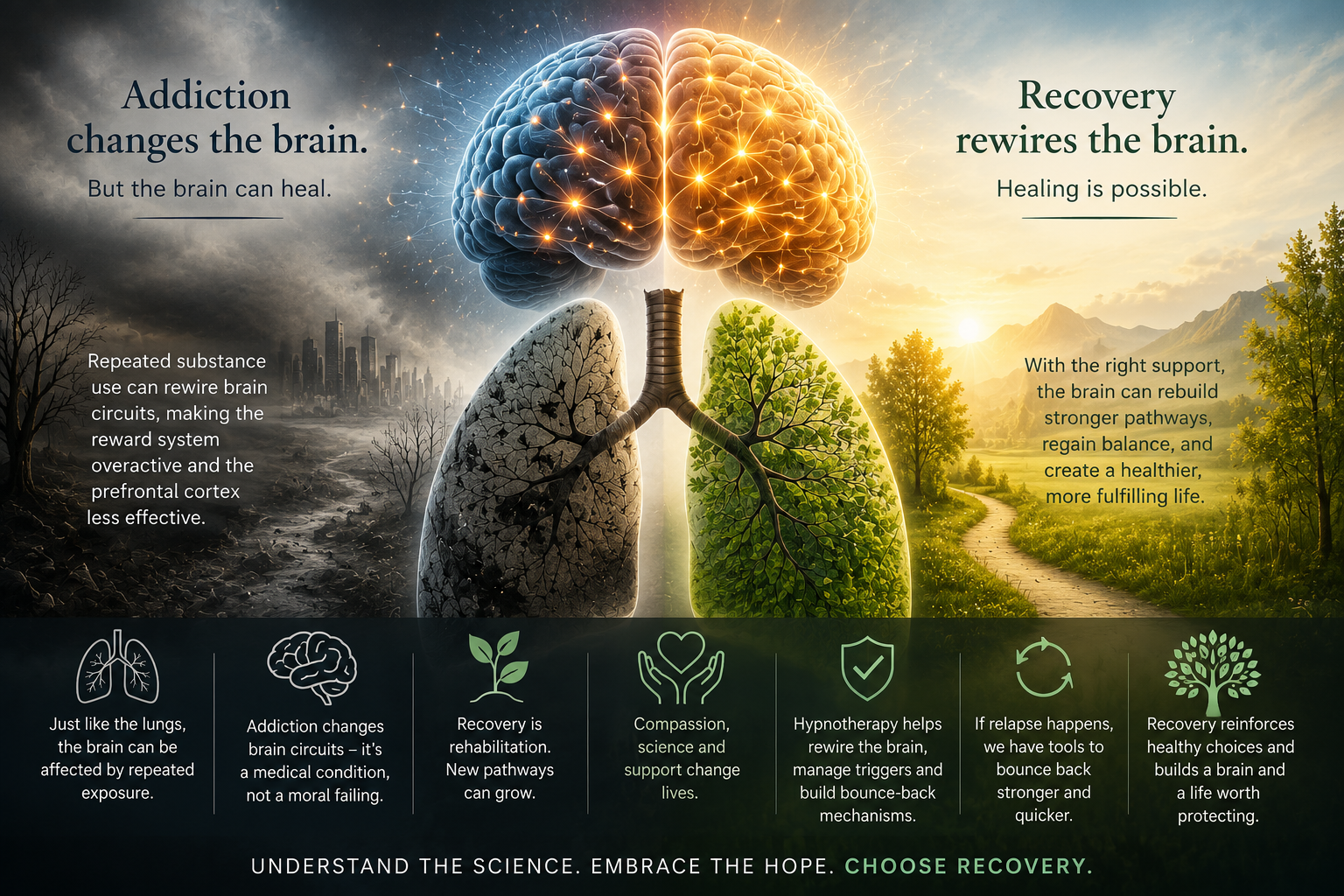
Think about smoking. Many people smoke for years. Their lungs become irritated and inflamed. They develop a cough, become short of breath, and their breathing worsens. If they stop smoking early enough, something remarkable happens. The inflammation settles. Their breathing improves. Their lungs recover. Nobody finds that surprising. But not everyone stops in time. Some people continue smoking long enough that permanent structural changes develop. The airways remodel, the delicate air sacs become damaged, and eventually they cross a threshold into COPD or emphysema. At that point, smoking hasn't just irritated the lungs. It has changed them. If they stop smoking then, the disease usually stops progressing. Pulmonary rehabilitation can improve breathing, increase quality of life, and help them function far better. But the damage isn't erased. If they start smoking again years later, they don't go back to having healthy lungs. They restart with lungs that already have COPD. Nobody accuses someone with COPD of lacking willpower because their lungs don't magically become healthy again. We understand that the organ has changed.
The Brain Works in a Similar Way
The brain is also an organ. Many people drink alcohol or use drugs recreationally without developing addiction. When they stop, their brains recover because they never crossed that biological threshold. But for a smaller group of people, repeated exposure begins to physically remodel the brain. The reward system becomes hypersensitive. Dopamine signalling changes. The prefrontal cortex, the part of the brain responsible for planning, judgement, decision-making and impulse control becomes less effective at regulating behaviour. Meanwhile, the glutamate system builds incredibly powerful associations between the substance and specific people, places, emotions, stress and memories. These aren't simply habits. They are changes in how information travels through the brain. That is the disease.
The Invisible Illness
Imagine someone develops a tumour pressing on the frontal lobe of their brain. Suddenly they become impulsive. They make poor decisions. Their personality changes. Most people would never say, "They just need more self-control."Why? Because we can point to the tumour. It's visible. It's tangible. Addiction is different. We can't hold dopamine in our hands. We can't see glutamate laying down powerful learning pathways. We can't watch the prefrontal cortex gradually lose its influence over the reward system with the naked eye. Although modern PET and fMRI brain scans can demonstrate these changes, they aren't something most people ever see. Because the injury is microscopic and network-based rather than obvious to the eye, society often assumes nothing has changed. But neuroscience tells a very different story.
Crossing the Threshold
Early substance use causes temporary changes. The brain returns to balance. Repeated exposure, however, forces the brain to adapt. To protect itself from repeated dopamine surges, dopamine receptors become less responsive. Reward pathways reorganise. Long-lasting molecular changes alter how genes are expressed inside key reward centres. Eventually, the brain crosses a threshold. At that point, addiction isn't simply something a person does. It becomes something the brain has become.
Recovery Is Rehabilitation
This is where recovery becomes so inspiring. Recovery isn't about waiting for the brain to magically reset. It's rehabilitation. Just as pulmonary rehabilitation teaches someone with COPD to breathe more effectively, recovery helps rebuild healthier brain function. Every day of recovery strengthens the very systems addiction weakened. Therapy strengthens the prefrontal cortex. Mindfulness improves emotional regulation. Exercise supports dopamine recovery. Healthy relationships create new reward pathways. Purpose gives the brain something healthier to pursue. Neuroplasticity allows entirely new pathways to develop. Over time, making healthy choices becomes easier, not because life becomes effortless, but because the brain itself becomes stronger at supporting those choices.
Why Relapse Can Happen So Quickly
One of the most misunderstood aspects of addiction is relapse. People often ask, "If they've been sober for ten years, why did it all come back so quickly?"The answer lies in the brain. Those deeply learned pathways don't simply disappear. They become quiet, dormant. If someone with COPD starts smoking again, they don't restart with healthy lungs. If someone whose brain has developed addiction returns to substance use after years of recovery, they don't restart with the brain of someone who's never been addicted. Those pathways can reactivate rapidly because the underlying architecture still exists. This doesn't mean recovery has failed. It means the disease remains vulnerable to reactivation.
This is one of the reasons hypnotherapy can be such a valuable part of recovery. Rather than simply helping someone "stop using," effective hypnotherapy supports the brain's remarkable capacity for neuroplasticity, the ability to build and strengthen new neural pathways through repeated healthy experiences, thoughts and behaviours. Alongside this, the brain continues its natural processes of healing and repair, including neurogenesis in areas such as the hippocampus, which plays an important role in learning, memory and emotional regulation. During therapy, we don't just focus on reducing cravings; we help people create new responses to stress, emotions and environmental triggers, while weakening the old automatic patterns that kept addiction alive. We also install practical relapse-prevention strategies and 'bounce-back' mechanisms, so that if someone ever stumbles, it doesn't become a full return to old behaviours. Instead, they have the skills, mindset and internal resources to recognise what's happening, regain their footing quickly and reinforce everything they've already achieved. Recovery isn't simply about avoiding substances; it's about building a brain and a life that make long-term recovery increasingly natural and sustainable.
This Is Not an Excuse
Understanding addiction as a brain disease is not about removing responsibility. Quite the opposite, recovery is built on thousands of healthy choices. Every day, every week, every year. Those choices matter enormously, and neuroscience helps explain why those choices can feel almost impossible in early recovery, and why they become progressively easier as the brain heals and new neural pathways strengthen. Compassion and accountability are not opposites; they belong together.
The Take-Home Message
When we understand that addiction changes the brain in much the same way smoking can permanently change the lungs, everything starts to make more sense. We stop asking, "Why don't they just stop?"And we begin asking, "What does this person's brain need in order to recover?"That shift changes everything. It reduces shame. It encourages treatment. It supports long-term recovery, and most importantly, it reminds us that people are far more than the illness they are living with. The brain is capable of extraordinary healing. Recovery doesn't erase the past. But it does build a healthier future, one new pathway, one healthy choice, and one day at a time.